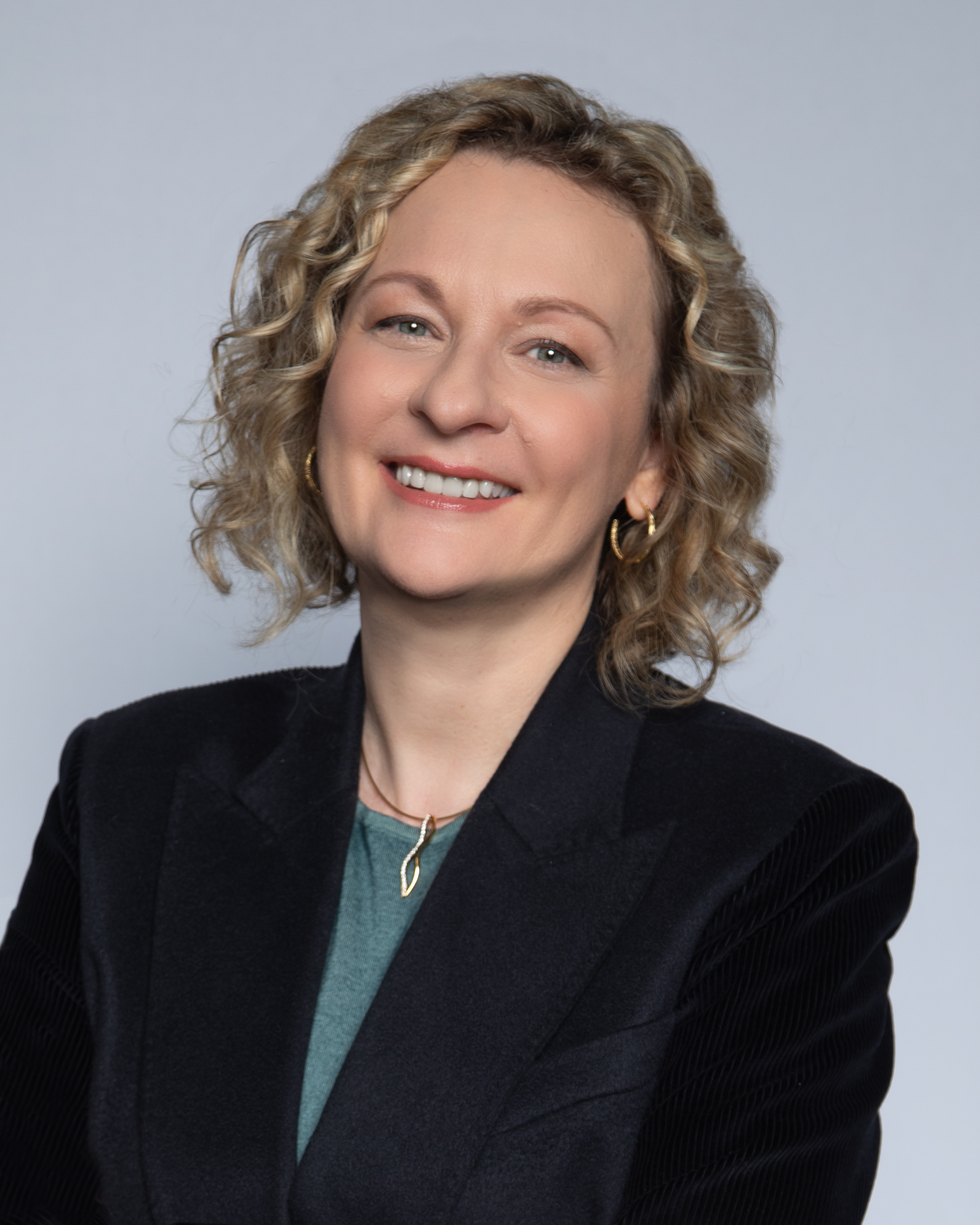
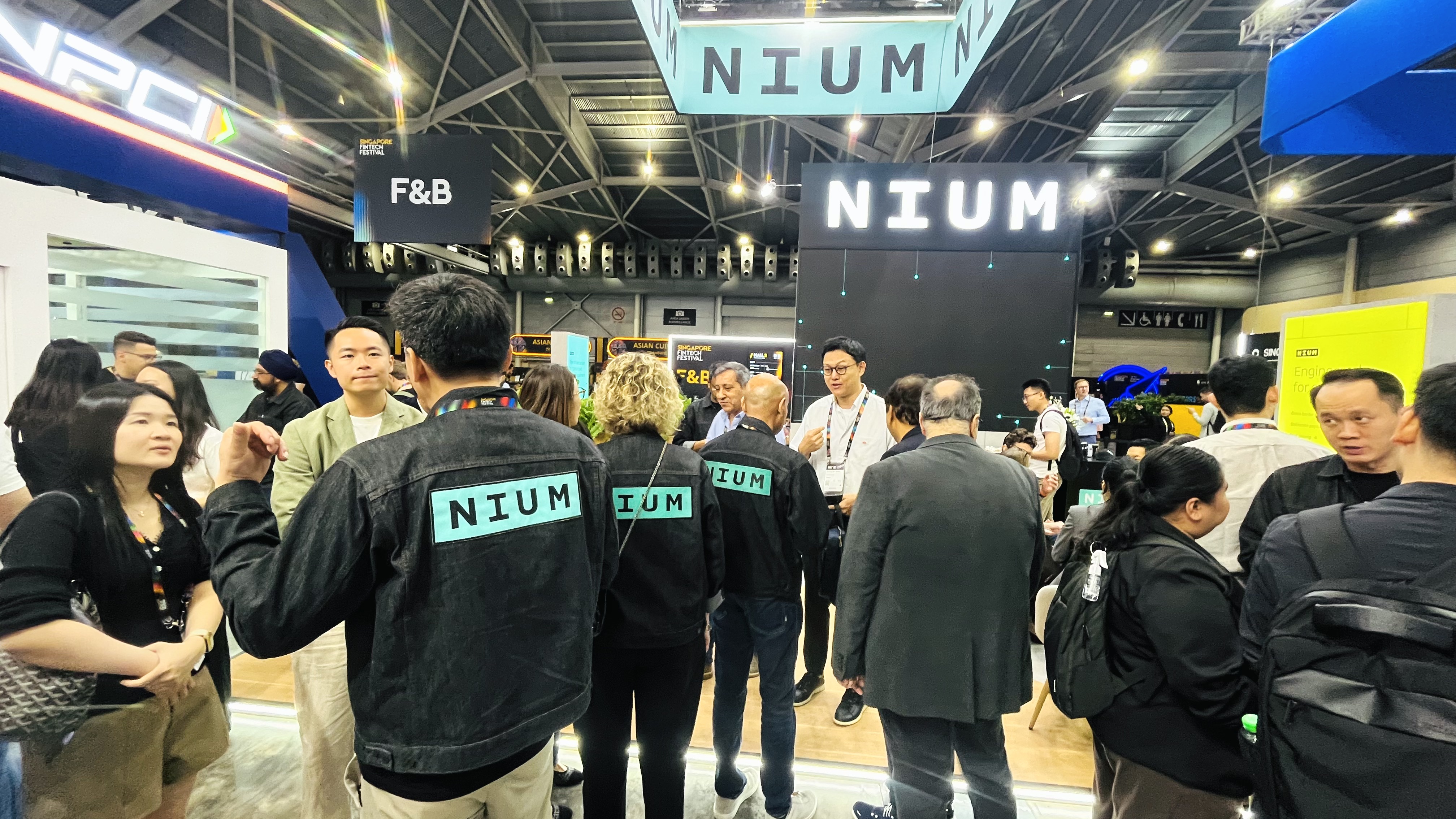
Attending Singapore Fintech Festival 2026 with Nium was a special high for me. Last time I was at SFF was November 2019, a handful of months before the COVID shutdowns. Even though the event was probably one-fifth of its current size, it was already on my “must-attend” list because of its scale and impact.
For Nium, returning to the Singapore FinTech Festival is quite literally, a homecoming. Singapore is our birthplace, our co-headquarters. Spanning banking, fintechs, and even regulators, it brings a tightly knit community from APAC and the Middle East, as well as global industry players from the rest of the world. This is a high-energy, dynamic event unlike any I’ve encountered in 2026, with plenty of real dealmaking taking place right there on the show floor, partners and customers celebrating what they’re building together, and regulators leaning in to showcase how they are supporting the industry, including MAS’s BLOOM stablecoin-focused initiative that we’re part of with Visa.
With all the key stakeholders in one place, the event offers an incredible opportunity to not only listen to different perspectives on familiar challenges and the questions shaping what comes next in fintech, but also to take active part in solving them.
Across the discussions we led and joined — as panelists, presenters, hosts of our side event, “Nium @ Nite: Made in Singapore”, and in conversations on the booth floor — a recurring theme emerged: technology’s potential matters, but so do the choices that make it useful and implementable at scale. Numerous meeting discussions about our global payments and RTP infra quickly turned to implementation and joint go-to-market planning sessions. Conversations about stablecoin settlement explored practical business needs and the work required to meet them.
A panel on company scaling with our CEO, Prajit Nanu, and the CEOs of bolttech and DANA brought the focus to how leaders work and where AI gives teams an edge. Most sessions approached progress from different angles, but shared a common question: what does innovation in money movement and AI help businesses do better?
Here’s what we took away.

1. Technology isn’t the only thing that needs to keep up
Day 1’s “Payments Went Global. Can the Tech Keep Up?” posed a technology question, but the discussion pointed to a broader challenge. As moderator Nilixa Devlukia, Chair, Open Finance Association, concluded, the issue isn’t simply whether the technology is capable. It’s how firms implement and manage it, and what clarity regulators provide.
Yogesh Sangle, EVP of APAC Sales at Nium, brought that implementation question down to a practical choice: when should a payment provider connect directly to a country’s payment rails, and when should it work through a banking partner? Scale alone doesn’t settle it.
“The easiest thing is to say, ‘We have scale in this country, so let’s go direct.’ But scale has to be backed by a good user experience for the end customer.”
He described weighing a move to a direct connection against whether the customer experience would remain optimal. Sometimes choosing to stay with a partner is the right approach, especially when tech resources and local know-how are scarce. That’s a useful distinction: a more direct connection doesn’t automatically guarantee a better outcome. The work is in choosing and managing connections that deliver for the people using them.
The takeaway
Technology creates options; implementation determines how well they serve the customer.
2. Simplification starts with how leaders work
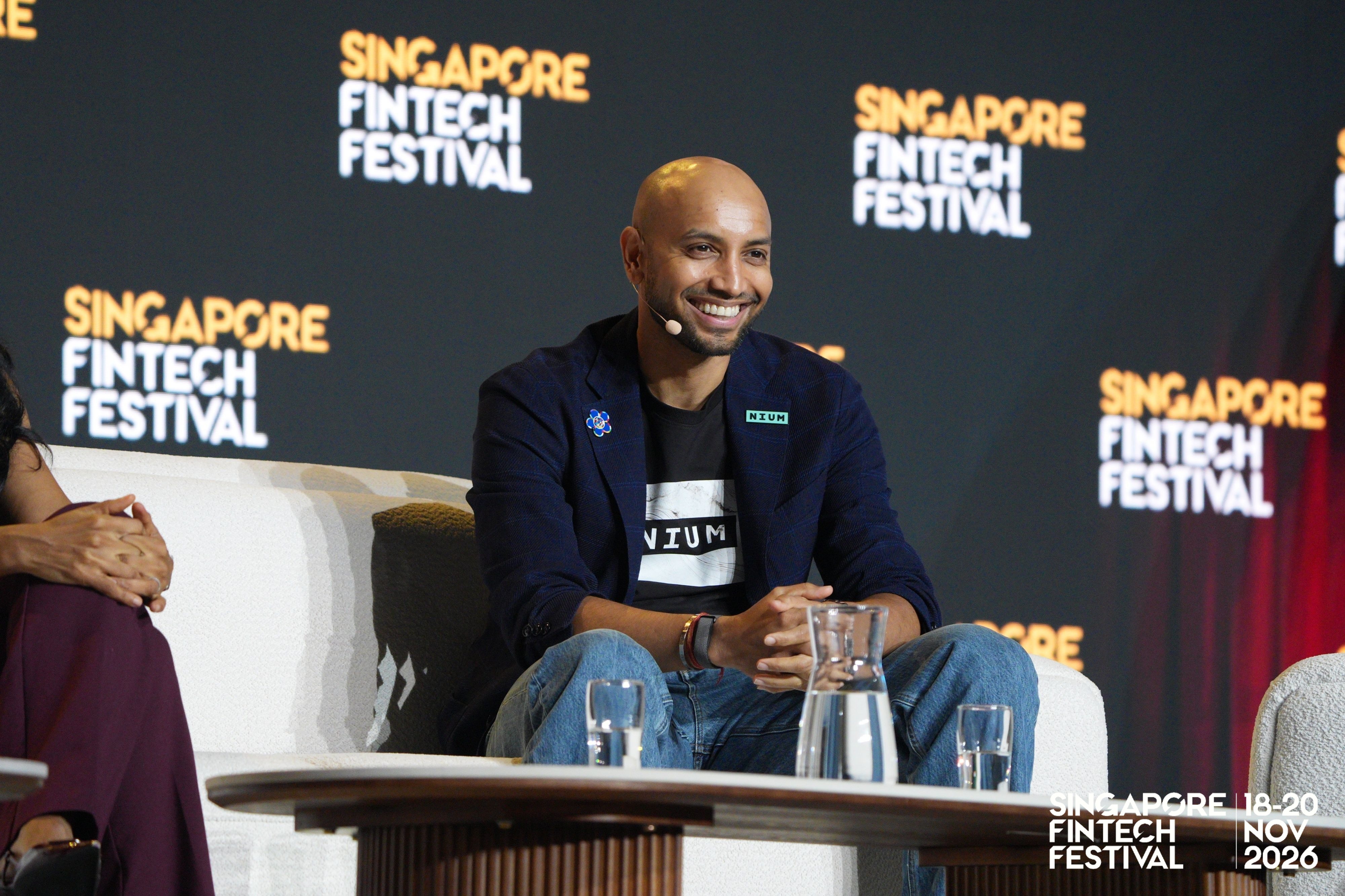
Day 3’s “When Growth Gets Harder, What Must a Company Simplify to Keep Scaling in 2027?” turned the conversation toward the choices leaders make as their businesses grow. Our CEO and co-founder Prajit Nanu challenged the tendency to make simplification itself too complicated.
“Humans complicate things on our own path to progress. I believe AI really allows simplification.”
He described our 2025 offsite where he brought our senior leadership team together and gave us an hour, prompts, and AI tools to build apps — including C-suite leaders without any coding experience. Rather than only considering what AI might do, the leadership team had to try and figure it for themselves. And guess what — today, we're all AI-pilled — pushing the limits of our Claude Enterprise plan, building tools and automating data-driven workflows for ourselves and our teams, across every function.
Moderator Suresh Shankar, Founder & CEO of Crayon Data, closed by suggesting that a startup’s best “AI” might still be its founder’s instincts. That offered a counterpoint rather than a contradiction.
The takeaway
Tools can make experimentation easier, but leaders still have to decide what to pursue, what to simplify, and where a human check remains valuable.
3. Better payment corridors should make business easier
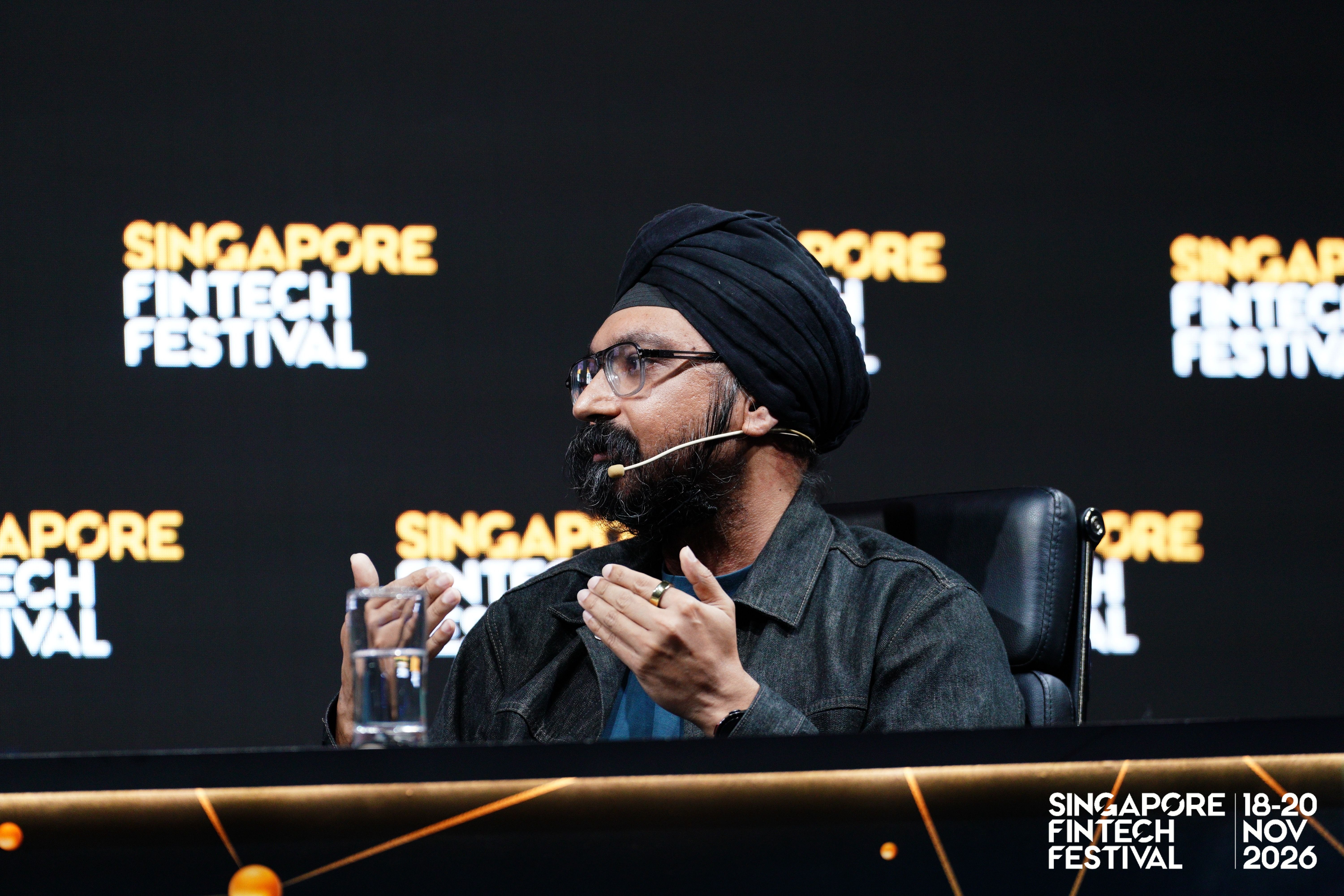
Also on Day 3, “The Missing Middle: Powering the Next Wave of Commercial Payment Corridors” brought the discussion back to everyday business needs: paying suppliers, receiving money from customers, and moving funds across borders.
Moderator Kaitlyn Thinn, Director, Strategy at the Global Finance & Technology Network, closed with a practical takeaway: progress wasn’t primarily about the technology behind those payments. It was about solving integration problems, improving efficiency, and giving businesses time back.
Nium SVP of APAC Account Management, Runn Sachasiri, offered a framework for thinking about the infrastructure needed to deliver those outcomes:
“When I think of a good payment rail, there are five elements: it should be secure, instant, certain, innovative, and connected.”
He pointed to Singapore as an example, highlighting governance, access for fintech innovators, and connections with payment systems beyond its borders. His emphasis wasn’t just on how quickly a payment moves, but on how the network is set-up and organized, who can participate, and how it connects to other networks.
An example from Yogesh’s panel made that challenge tangible: a traveler might want to pay with a card, while the merchant wants to receive money through a local instant payment system. Accommodating both preferences, without losing what each side values, is different from simply making either system faster.
The takeaway
A useful test isn’t simply what new infrastructure exists, but what it has made easier for businesses.
4. Settlement availability is a liquidity question, too
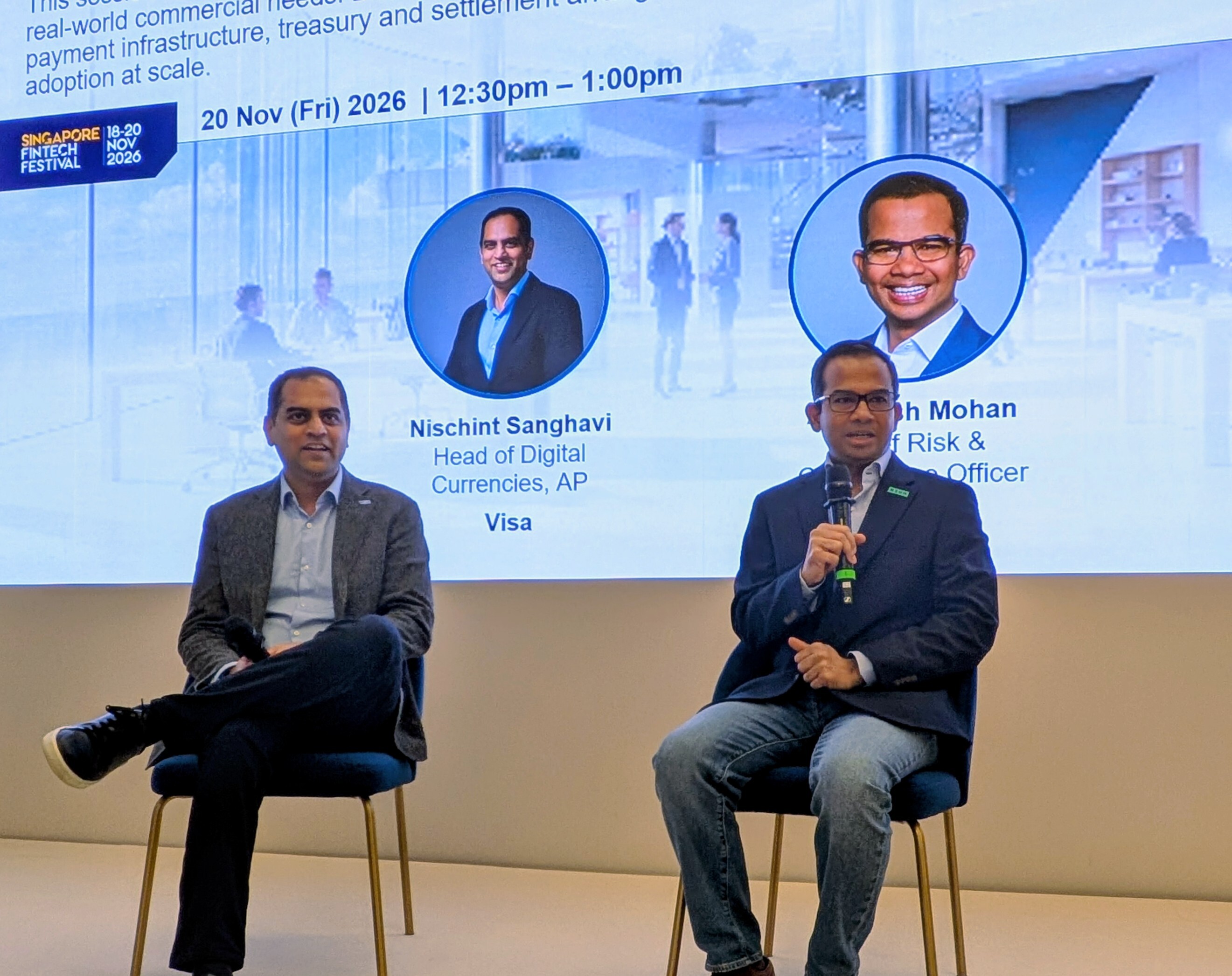
At the Monetary Authority of Singapore (MAS) booth, Nischint Sanghavi, Head of Digital Currencies, AP at Visa, and Amaresh Mohan, Nium’s Chief Risk & Compliance Officer, highlighted our joint work on the MAS-led BLOOM initiative, enabling to move from five-day to seven-day settlement with stablecoins.
The discussion highlighted several practical benefits: settlement within minutes rather than hours, greater flexibility to rebalance liquidity across global operations, and a reduced collateral buffer with Visa.
After less than a handful of months live and settling hundreds of millions of digital dollars with Visa under this initative, controls remain central, inlcuding retaining existing authorization checks as well as layering additional wallet-address verifications.
Runn’s panel offered a useful qualification: the onward payment from card schemes to acquirers and merchants still runs largely in fiat. Progress in one part of the flow doesn’t mean the entire chain has changed. Solving last mile delivery will continue to be to be top of mind for the foreseeable future.
The takeaway
The value of stablecoin settlement here isn’t simply in using a different rail, but in freeing funds previously tied up to cover periods when settlement wasn’t available.
Beyond the sessions
The week wasn’t all about payment rails and regulatory requirements. It was also a chance to reconnect, exchange ideas, and spend time with the people across the ecosystem shaping what comes next.
At our signature Nium@Nite event, we welcomed customers, partners, and peers to the Warehouse Hotel along the Singapore River. With Trulioo as our special guest, the evening brought together local flavors, great music, and drinks — and gave us time to continue conversations beyond the festival floor well past midnight.
Our Chief Business Officer, Anupam Pahuja, also spoke with The Asian Banker about putting stablecoins to work for businesses, covering use cases from treasury and settlement to cross-border payout corridors.
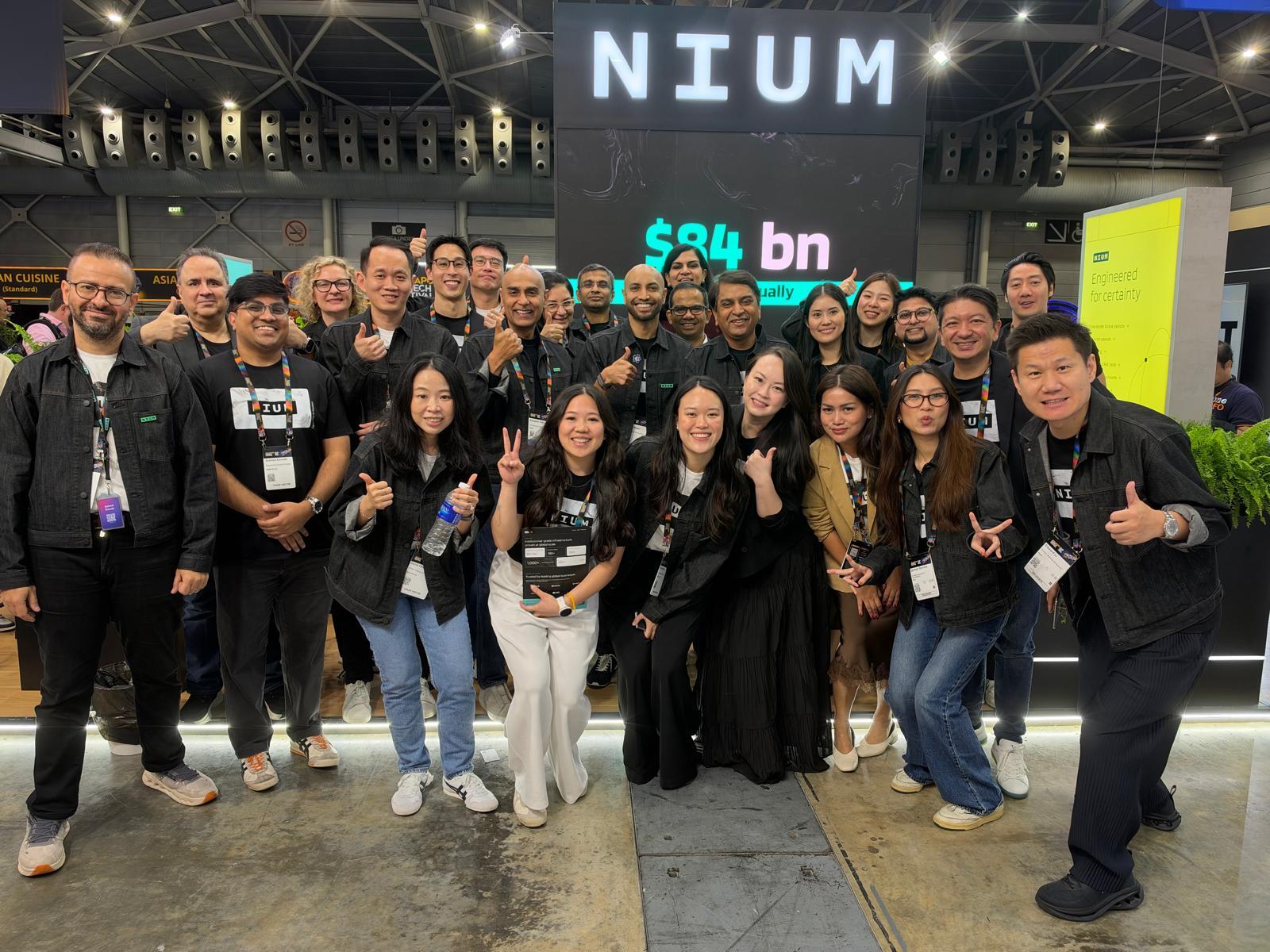
With 30 Nium colleagues on the ground — from our Singapore office as well as Japan, Hong Kong, Indonesia, Malaysia, Thailand, United Arab Emirates, India, the UK, and the US — it was a fantastic showing of what makes Nium unique.
To every customer, partner, and visitor who met with us, shared a challenge, or brought a fresh perspective: thank you. And to our team, on the ground and behind the scenes: thank you for making it all happen.
We leave SFF with deeper relationships, stronger partnerships, and a practical question to carry us into the year ahead: what can we make work significantly better to unlock even more growth for the businesses that depend on Nium to move hundreds of billions of dollars annually?