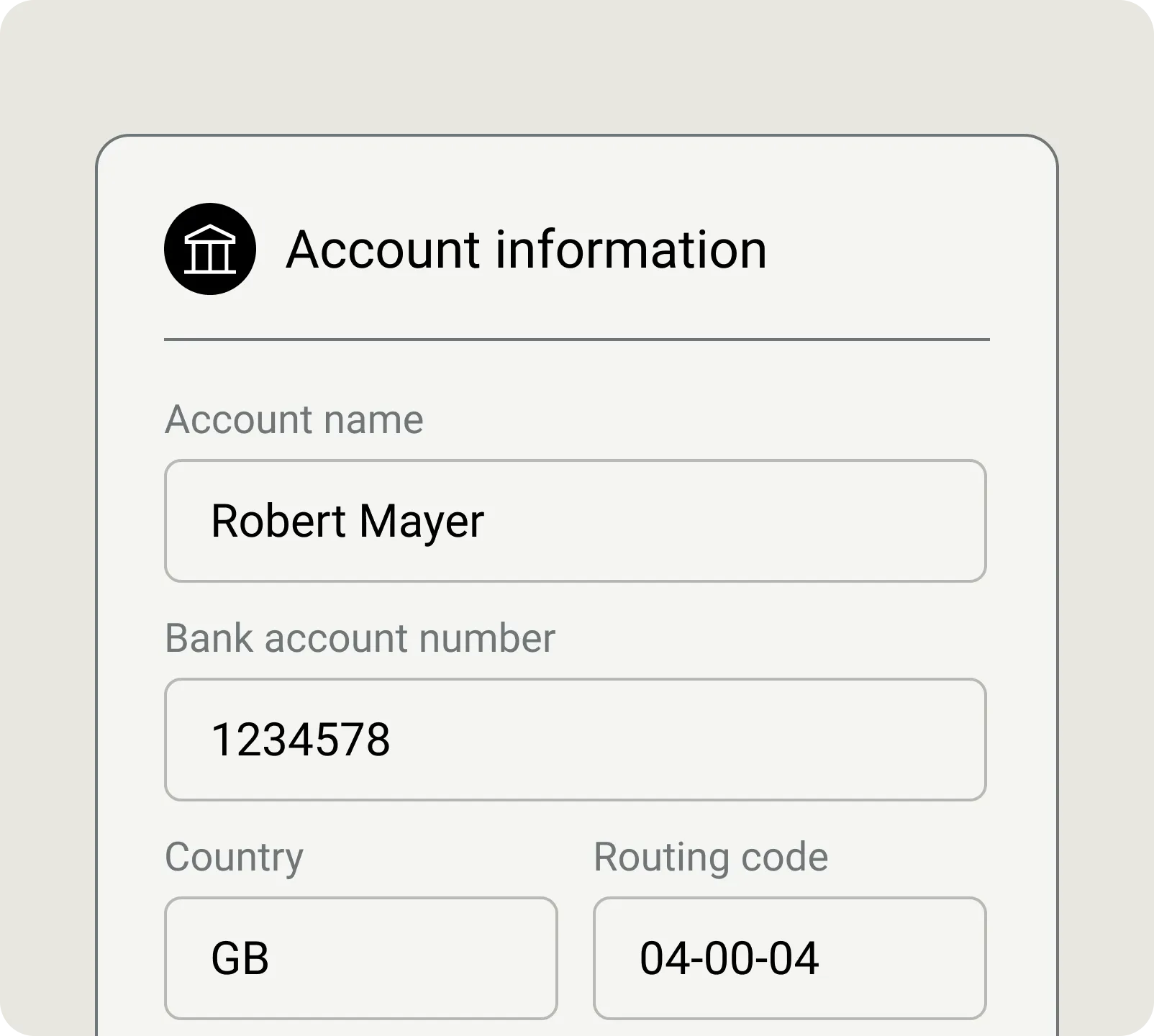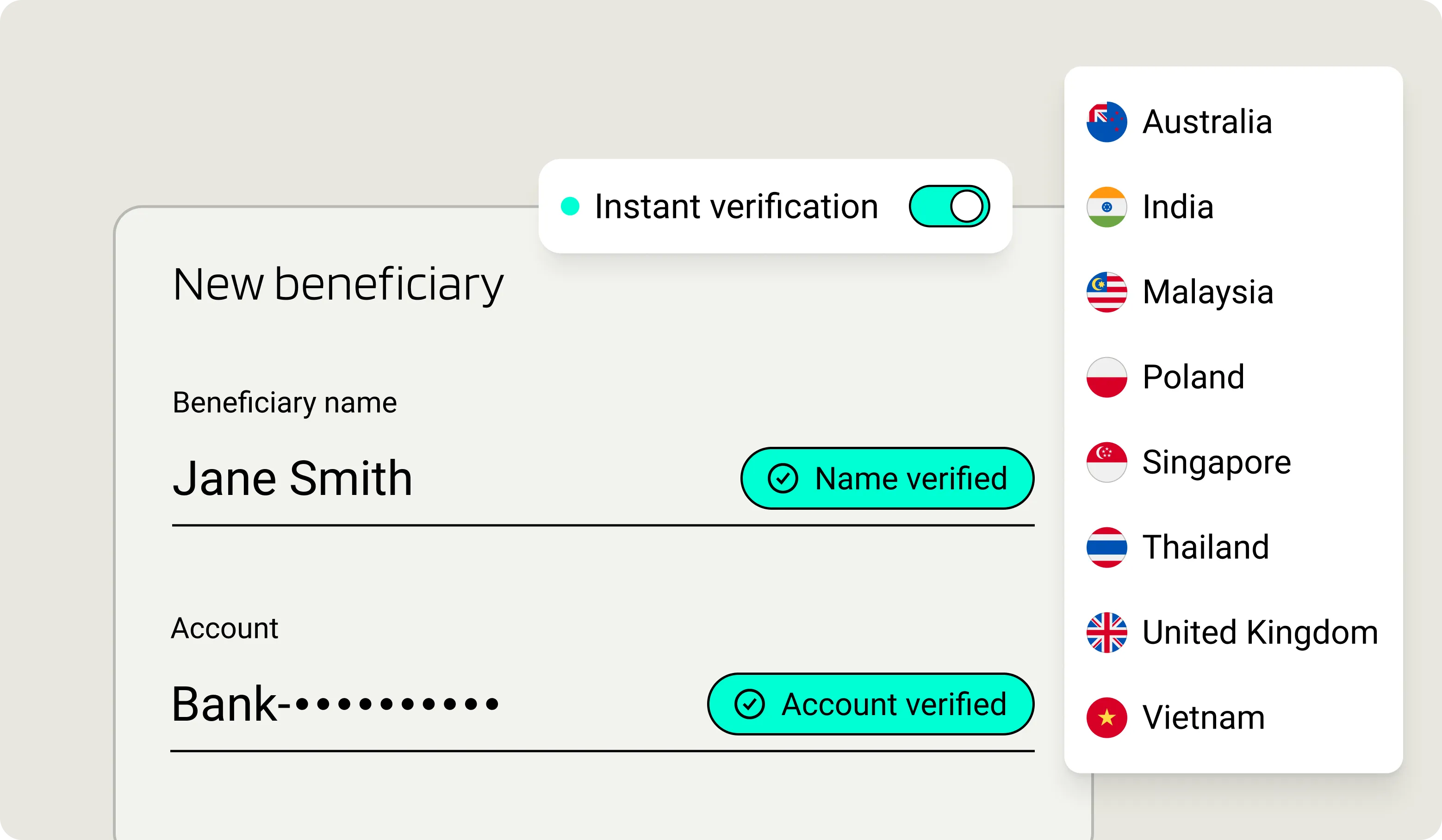
During onboarding
Verify bank details as users, vendors, and beneficiaries are added. Keep bad or mismatched data out from the start.
Instantly verify global bank account details before sending payments. Nium Verify helps you reduce failed transactions, prevent fraud, and eliminate costly returns.

Eliminate failed payments
70% fail due to incorrect details. Verify before you send and get it right first time.
Cut the costs of errors
Each failure costs up to $14 plus manual work. Validate upfront and avoid retries.
Ensure every payout lands first time
No delays. No rework. Payments land where they should.
Protect payments from fraud
Match account names to bank records and catch issues early.
Move money faster
Skip 5–7 day checks. Verify instantly and keep payments moving.
API Integration
Built for scale
Embed real-time account verification directly into your onboarding and payout flows.
Nium Verify Portal
No engineering required
Verify accounts instantly through the Nium dashboard.
ROI CALCULATOR
Each failed payment can cost up to $14. Nearly 70% come down to incorrect details. See what you're losing and how much you could save.
ESTIMATED ANNUAL SAVINGS
$480K
In ops cost from prevented failures
MONTHLY SAVINGS
$40K
FAILURES PREVENTED / MO
3,500
FAILED PAYMENTS YOU HAVE TODAY
5,000
— of which 3,500 could be caught before they fail
01 — MONTHLY PAYOUT VOLUME
Payout Volume
50K payments
02 — RETURN / FAILURE RATE
Current failure rate
10%
03 — OPS COST PER FAILURE
Ops cost per failed payment
$15
77%
Stop 77% of payment returns
before they happen
30+
Global coverage
30+ countries with real-time verification
<2 seconds
Instant checks
verify accounts in under 2 seconds
7 days
Instant setup
go live in as little as 7 days
Nium Verify replaces slow, manual checks with automated, real-time validation.
Speed
With Nium Verify
Errors detected instantly
InstantWithout Verification
Verification takes days
Verification method
With Nium Verify
Automated, real-time checks
Without Verification
Manual checks and reconciliation
User effort
With Nium Verify
Send payments right the first time
Without Verification
Requires beneficiary follow-up
Cost per failure
With Nium Verify
Verify from $0.15
100× cheaperWithout Verification
Failures cost $15–$50 each
Resolution time
With Nium Verify
Fixed before payment
Without Verification
Fixes take hours or days
Compliance risk
With Nium Verify
Risk removed upfront
Without Verification
Risk after payout
Customer trust
With Nium Verify
Payments land first time
Without Verification
Delays and failed payments
HOW IT WORKS
Verify accounts via API or directly in the Nium Portal — with real-time results.
1. Submit account details
Send the account holder name, account number, and bank code via API or portal.
2. Nium verifies in real time
Nium connects directly to clearing systems and banking partners to validate the details instantly.
3. Get a clear result instantly
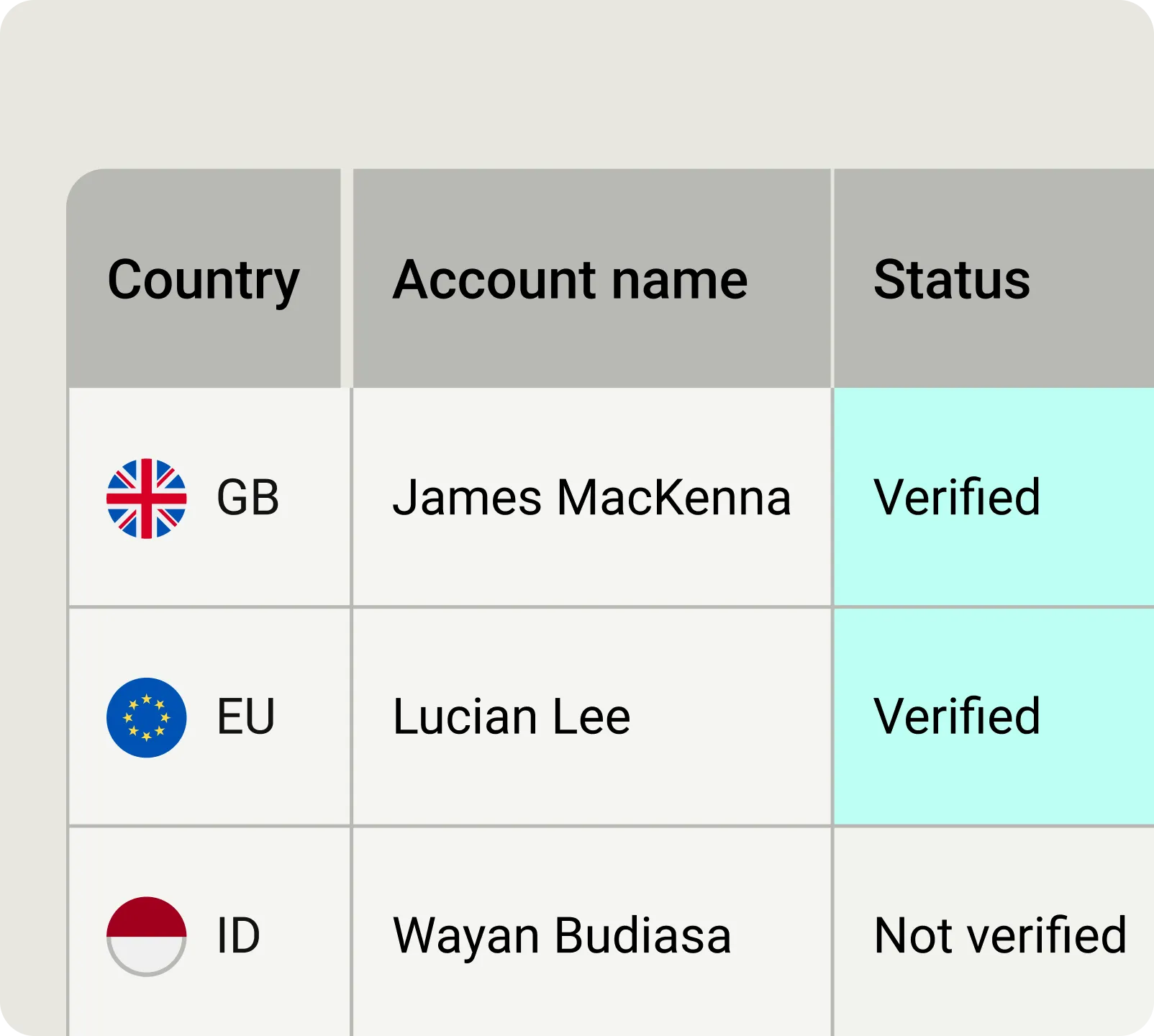
Receive a standardized response: Verified, Not Verified, or Not Supported.
USE CASES
Nium Verify fits across your payment flow, catching issues before they turn into failures.
During onboarding
Verify bank details as users, vendors, and beneficiaries are added. Keep bad or mismatched data out from the start.
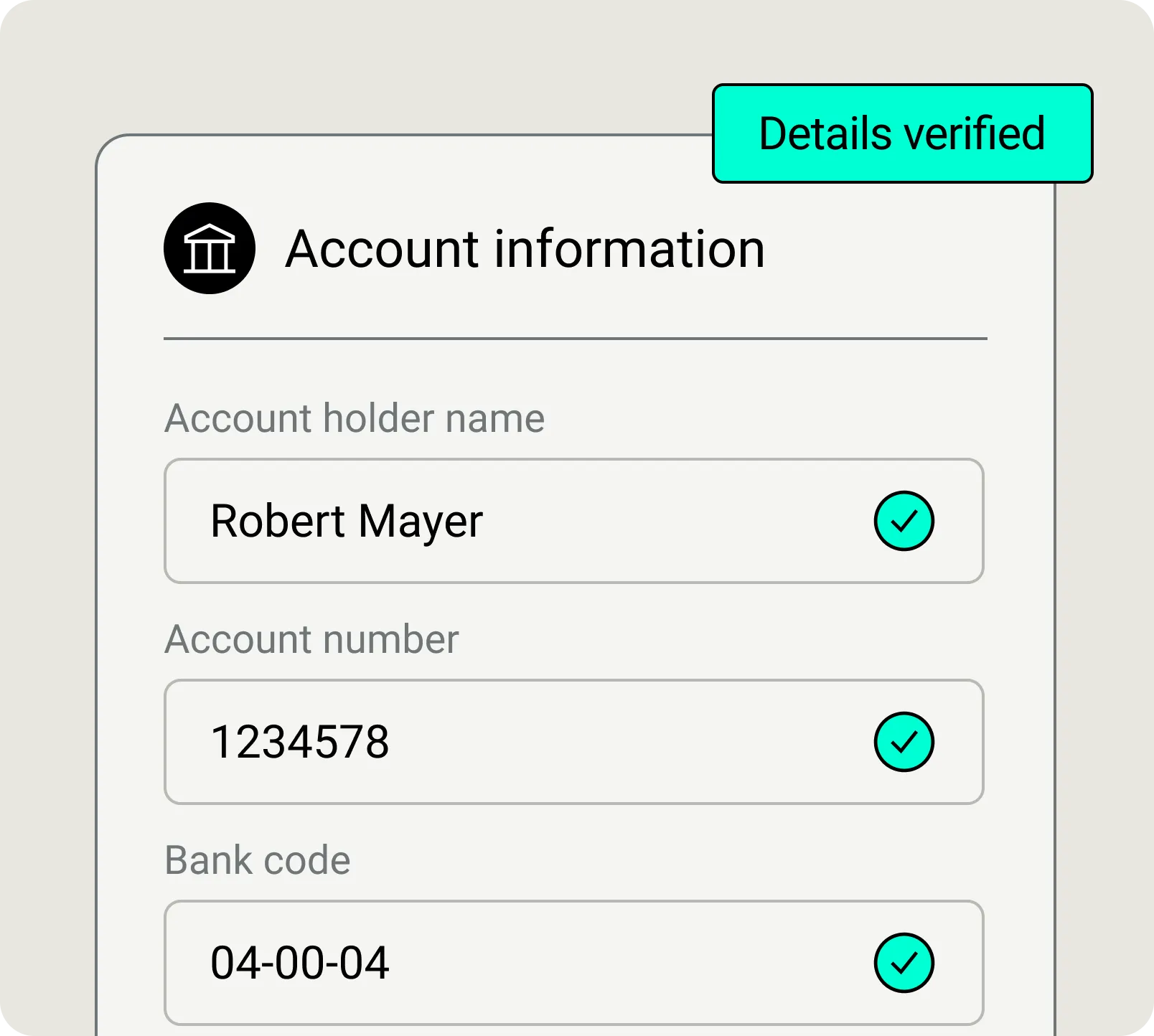
During updates and checks
Validate changes when account details are updated. Reduce fraud risk and prevent misdirected payments.
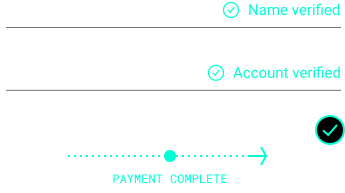
Before you send
Run a final check before payout. Improve success rates and avoid failed transactions.
See how much your business could save with Nium Verify or speak with our team to model your payout data.
FAQs
Bank account verification for payouts confirms that a recipient's account number, bank code, and account holder name are valid and active before a payment is executed. Without it, incorrect account details cause 10–15% of payments to fail — resulting in returns, delays, and manual intervention that compounds cost at scale.
Nium Verify provides instant bank account verification for payouts across 50+ markets, connecting directly to local banking systems without test transactions. It also confirms account ownership, making it essential for vendor onboarding, payroll disbursements, and beneficiary management workflows where account accuracy directly affects payment success rates.
Here is how Nium Verify works:
(1) Submit the recipient's account details via the Nium Verify API.
(2) Nium connects in real time to the local banking system in that market.
(3) Verify returns account status, account holder name match, and any flags within seconds.
(4) If details are correct, proceed with the payment. If not, flag the issue before any funds move. No test transactions, no delays.
Nium Verify is also accessible via the Nium Portal.
Yes. Nium Verify validates accounts instantly via API without any penny drop or test transaction. Verification happens through direct connections to local banking systems and typically returns a result within seconds.
The Nium Verify bank verification API response returns three core data points: account status (valid or invalid), account holder name retrieved directly from the recipient's bank, and a name match score indicating how closely it aligns with the name you submitted.
This gives you a complete pre-payment signal in a single API call — not just a yes or no, but the context to act on it. A confirmed name match clears the payment. A low name match score flags the record for review. An invalid account status stops the payment before funds move. The response is returned within seconds, with no test transaction required. Nium Verify also surfaces this data through the Nium Portal for teams operating without direct API integration, supporting Confirmation of Payee compliance requirements in the EU and UK.
Nium Verify covers 50+ markets with 95%+ account reach in available markets. Key supported currencies include USD, EUR, GBP, MYR, PKR, IDR, SGD, INR, AUD, THB, and VND, with more being added continuously.
Using Nium Verify before sending payments achieves a 99% payout success rate, compared to the 10–15% failure rate that occurs without beneficiary account verification.
Yes. Verify supports compliance with payment verification regulations including Confirmation of Payee (CoP) requirements in the UK and Verification of Payee (VoP) requirements under the EU Instant Payments Regulation — and is built to adapt as verification mandates expand to new markets.
Bank account verification confirms that a specific account number, bank code, and account holder name are valid and match before a payment is sent. KYC (Know Your Customer) is a broader identity due diligence process that establishes who a person or business is — typically during onboarding — covering identity documents, sanctions screening, and risk classification.
The two serve different purposes and happen at different points. KYC validates the entity. Bank verification validates the account. Nium Verify handles the account layer: confirming that the bank details you hold for a customer, vendor, or employee are correct and active before funds move. It complements your KYC process but does not replace it.
Payout pre-flight verification is the practice of validating recipient bank account details immediately before a payment is executed — catching errors before funds leave your account rather than after. The term reflects the same logic as a pre-flight checklist: confirm everything is correct before departure, not mid-air.
Nium Verify is built for payout pre-flight verification. It connects directly to local banking systems in real time and returns account status, name match, and any flags within seconds — giving your payment operations team a clear go or no-go before the transaction is released.
A name match score indicates how closely the account holder name on file at the bank matches the name you submitted for verification. Rather than returning a binary match or no match, a name match score gives you a confidence level — useful when names differ due to abbreviations, legal name variations, or transliteration across scripts.
Nium Verify returns a name match score alongside account status, allowing you to set thresholds appropriate for your risk tolerance. A high score confirms the payment is likely reaching the right person. A low score flags the record for review before funds move, reducing misdirected payments without blocking legitimate ones.
Bank account verification for payouts confirms that a recipient's account number, bank code, and account holder name are valid and active before a payment is executed. Without it, incorrect account details cause 10–15% of payments to fail — resulting in returns, delays, and manual intervention that compounds cost at scale.
Nium Verify provides instant bank account verification for payouts across 50+ markets, connecting directly to local banking systems without test transactions. It also confirms account ownership, making it essential for vendor onboarding, payroll disbursements, and beneficiary management workflows where account accuracy directly affects payment success rates.
Yes. Nium Verify validates accounts instantly via API without any penny drop or test transaction. Verification happens through direct connections to local banking systems and typically returns a result within seconds.
Nium Verify covers 50+ markets with 95%+ account reach in available markets. Key supported currencies include USD, EUR, GBP, MYR, PKR, IDR, SGD, INR, AUD, THB, and VND, with more being added continuously.
Yes. Verify supports compliance with payment verification regulations including Confirmation of Payee (CoP) requirements in the UK and Verification of Payee (VoP) requirements under the EU Instant Payments Regulation — and is built to adapt as verification mandates expand to new markets.
Payout pre-flight verification is the practice of validating recipient bank account details immediately before a payment is executed — catching errors before funds leave your account rather than after. The term reflects the same logic as a pre-flight checklist: confirm everything is correct before departure, not mid-air.
Nium Verify is built for payout pre-flight verification. It connects directly to local banking systems in real time and returns account status, name match, and any flags within seconds — giving your payment operations team a clear go or no-go before the transaction is released.
Here is how Nium Verify works:
(1) Submit the recipient's account details via the Nium Verify API.
(2) Nium connects in real time to the local banking system in that market.
(3) Verify returns account status, account holder name match, and any flags within seconds.
(4) If details are correct, proceed with the payment. If not, flag the issue before any funds move. No test transactions, no delays.
Nium Verify is also accessible via the Nium Portal.
The Nium Verify bank verification API response returns three core data points: account status (valid or invalid), account holder name retrieved directly from the recipient's bank, and a name match score indicating how closely it aligns with the name you submitted.
This gives you a complete pre-payment signal in a single API call — not just a yes or no, but the context to act on it. A confirmed name match clears the payment. A low name match score flags the record for review. An invalid account status stops the payment before funds move. The response is returned within seconds, with no test transaction required. Nium Verify also surfaces this data through the Nium Portal for teams operating without direct API integration, supporting Confirmation of Payee compliance requirements in the EU and UK.
Using Nium Verify before sending payments achieves a 99% payout success rate, compared to the 10–15% failure rate that occurs without beneficiary account verification.
Bank account verification confirms that a specific account number, bank code, and account holder name are valid and match before a payment is sent. KYC (Know Your Customer) is a broader identity due diligence process that establishes who a person or business is — typically during onboarding — covering identity documents, sanctions screening, and risk classification.
The two serve different purposes and happen at different points. KYC validates the entity. Bank verification validates the account. Nium Verify handles the account layer: confirming that the bank details you hold for a customer, vendor, or employee are correct and active before funds move. It complements your KYC process but does not replace it.
A name match score indicates how closely the account holder name on file at the bank matches the name you submitted for verification. Rather than returning a binary match or no match, a name match score gives you a confidence level — useful when names differ due to abbreviations, legal name variations, or transliteration across scripts.
Nium Verify returns a name match score alongside account status, allowing you to set thresholds appropriate for your risk tolerance. A high score confirms the payment is likely reaching the right person. A low score flags the record for review before funds move, reducing misdirected payments without blocking legitimate ones.