
Every Money20/20 is about cross-border payments for Nium. But last week in Las Vegas felt different.
Across our team’s conversations with customers, partners, and industry peers, a consistent message emerged: the market has moved from hype to execution. Decision-makers increasingly take the ability to move money across borders as a given. Now they’re asking harder questions about how it happens — and how reliably and compliantly providers can deliver.
Having spent years building local connections and navigating regulatory requirements, we know firsthand that the infrastructure behind a payment matters as much as the destination. Those questions get to the heart of what makes a payment service dependable in practice, not just compelling on paper.
Here’s what else we’re taking away from Money20/20 USA this year.
1. Operational details are becoming deciding factors
The questions we discussed with other attendees went well beyond whether a provider could reach a particular market. Which rail would the payment use? What limits apply? Who controls the funds, and who helps when something goes wrong? Meanwhile, licensing, local presence, compliance, and round-the-clock support were part of the evaluation. Not details to work through after choosing a partner.
To us, that signals a more demanding buying process — and one we welcome. Having spent years building the infrastructure behind our payments, we’re glad to see decision makers looking more closely at what dependable delivery takes.
2. A crowded market makes local depth more important
With so many providers offering cross-border payments, a coverage map only tells buyers so much. The more revealing questions are about what sits behind it: local licenses, connections to payment rails, and the ability to resolve issues on the ground. Our team heard buyers drawing that distinction throughout the week.
It’s one we recognize from our own work building local connections: reaching a market and serving it well are not the same thing. The challenge for providers is to make that depth visible, rather than expecting a list of destinations to speak for itself.
3. Stablecoins and agentic commerce face different execution questions
Stablecoin conversations were increasingly practical this year at Money20/20 USA: How do you connect digital assets with fiat payments in a regulated, scalable way? Interest came alongside caution, particularly around banks’ direct exposure to crypto and the role of regulated intermediaries.
Agentic commerce generated excitement too, but the questions were more foundational. What happens when an agent-initiated payment fails, triggers a compliance check, or needs human intervention?
Our takeaway wasn’t that these developments are at the same stage. It was that both need clear controls and accountability before businesses can depend on them.
4. The conversation extends beyond sending money
Some of the most useful discussions were about what businesses need around a payment, not just the transfer itself. Our team heard requests for tools to manage currency exposure, interest in FX hedging, and conversations about virtual cards in travel and Latin America.
These needs connect: businesses want to decide how to hold, convert, spend, and send funds — not treat each as an isolated task. That’s familiar territory in our own conversations across payouts, FX, and card issuing. The opportunity is to make those activities work together around the way a business operates.
5. Interoperability still depends on doing the connecting
Interoperability came up repeatedly, but so did the work still needed to make it useful in practice. Local payment systems have different requirements and operating rules; connecting to one doesn’t automatically make it work seamlessly with another.
For businesses, the test is straightforward: does the service remove that complexity, or leave them to manage it?
Having spent years connecting rail by rail and market by market, we know how much work sits behind a simpler customer experience. The ambition is interconnected payments. Getting there still depends on the details.
6. Dependable payments start with strong governance
Our CFO, Andre Mancl, brought an internal perspective to that conversation in his interview with Tech Edge. As he defined it, dependable money movement starts with the checks and balances inside the company delivering it — transparency with the board, executives, and employees, and safeguards against a single point of failure.
“We’re dealing with money movement, so it’s a big deal. We’re dealing with regulators and compliance every single day, and that’s how we live and breathe. We have to be compliant all the time.” — Andre Mancl, CFO, Nium
“We have to be compliant all the time,” he said, a responsibility that makes governance central to maintaining Nium’s licenses, reputation, and business. He also discussed our multi-rail approach to moving value across fiat and digital currencies, and why listening to customers and partners remains the priority at Money20/20.
The people behind the progress
The week wasn’t all about payment rails and regulatory requirements. It was also a chance to build relationships, exchange ideas, and connect with the people shaping what comes next.
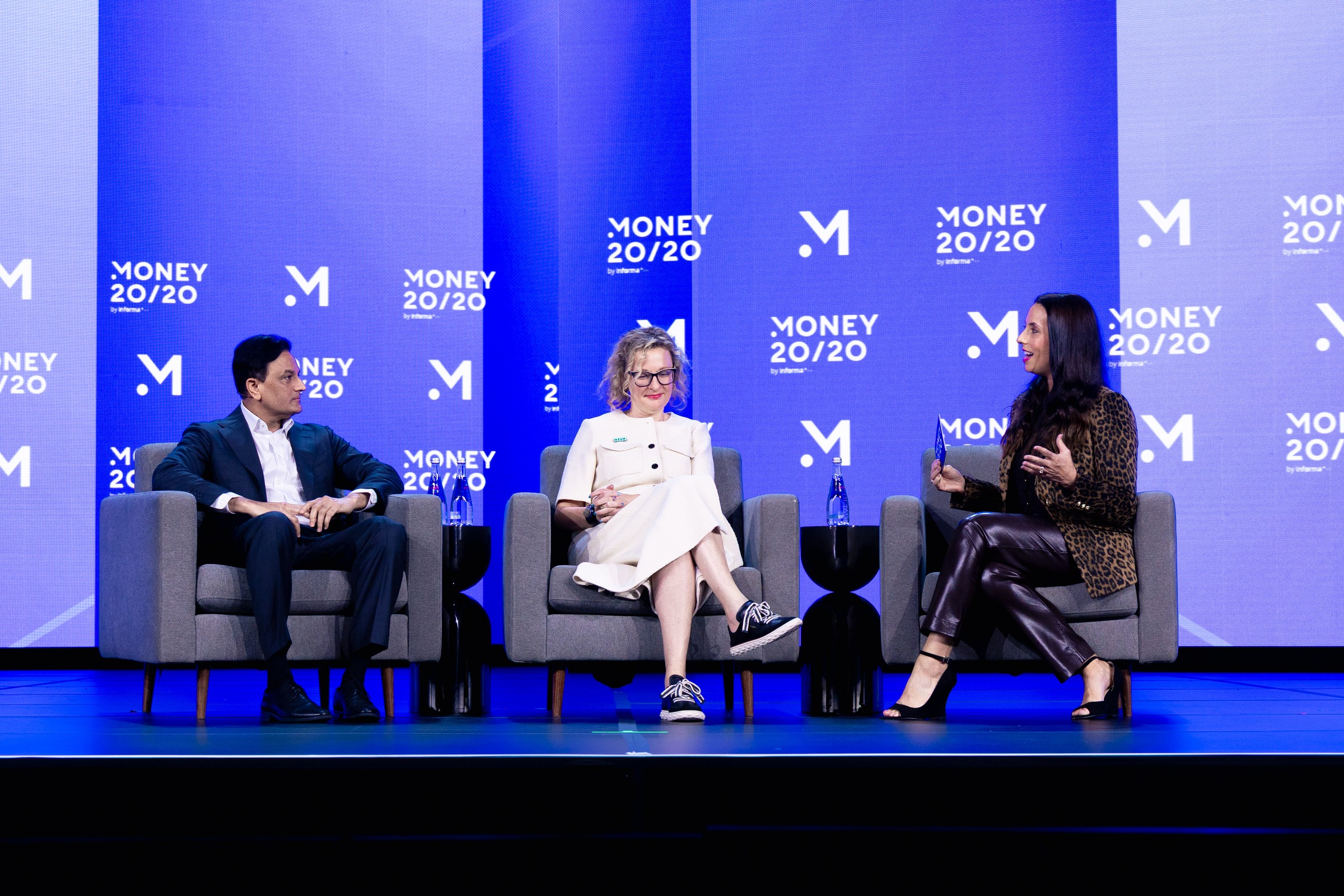
At our Women in Fintech Lunch, hosted with 30% Club and Heidrick & Struggles, more than 50 women from across the industry came together to connect. At Nium @ Nite Presents: The High Table, guests joined us for free-play poker and blackjack 59 floors above the Vegas Strip, with hand analysis and feedback from Jeff Madsen. And our CMO, Danielle Gotkis, joined JPMorgan Chase’s CMO on the Exchange Stage to explore a new reality: the next customer may not be a person.
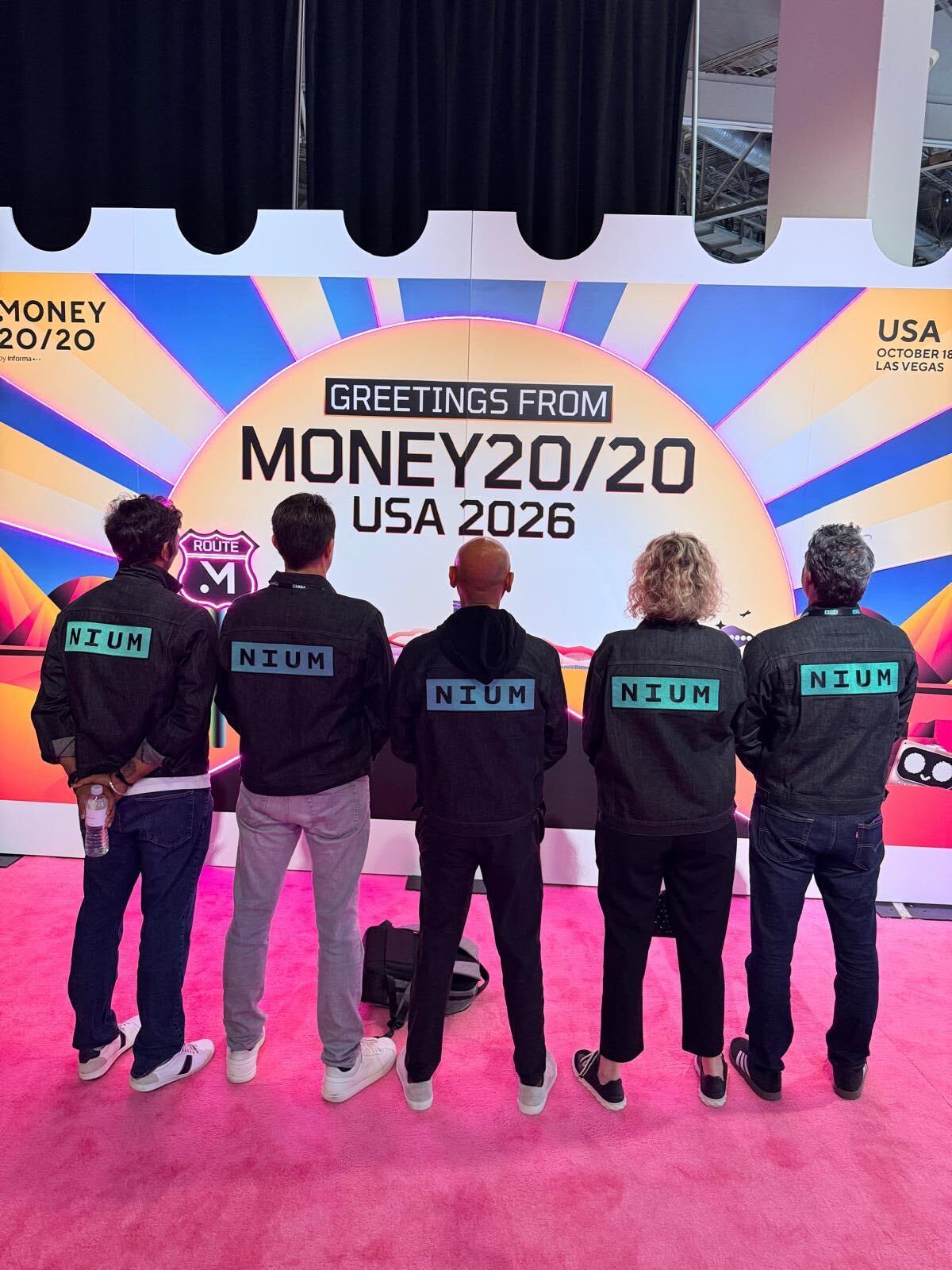
Thank you to the Nium team who made those moments possible — and whose signature jean jackets made a colleague easy to spot in the crowd.
We leave Money20/20 with stronger relationships and a clear message from our conversations: execution is what earns trust. New possibilities matter, but so does the work of making them reliable, compliant, and useful to the businesses that depend on them.