.jpg)
Today, we're releasing The Value of Certainty in Uncertain Times, an independent study conducted by Celent based on interviews with 210 banks and 210 corporates across 17 countries. The research addresses a question we've been exploring for years: Do banks and their corporate clients define success in cross-border payments the same way?
The answer is no. And the gap between their views represents a significant opportunity for banks willing to shift how they approach this business.
For too long, cross-border payments have been treated as a transaction to process rather than a service to manage. Banks have optimized for operational efficiency and cost. But our research reveals that corporates are seeking something different — and that distinction is reshaping the competitive landscape.
Corporates are signaling a need for more
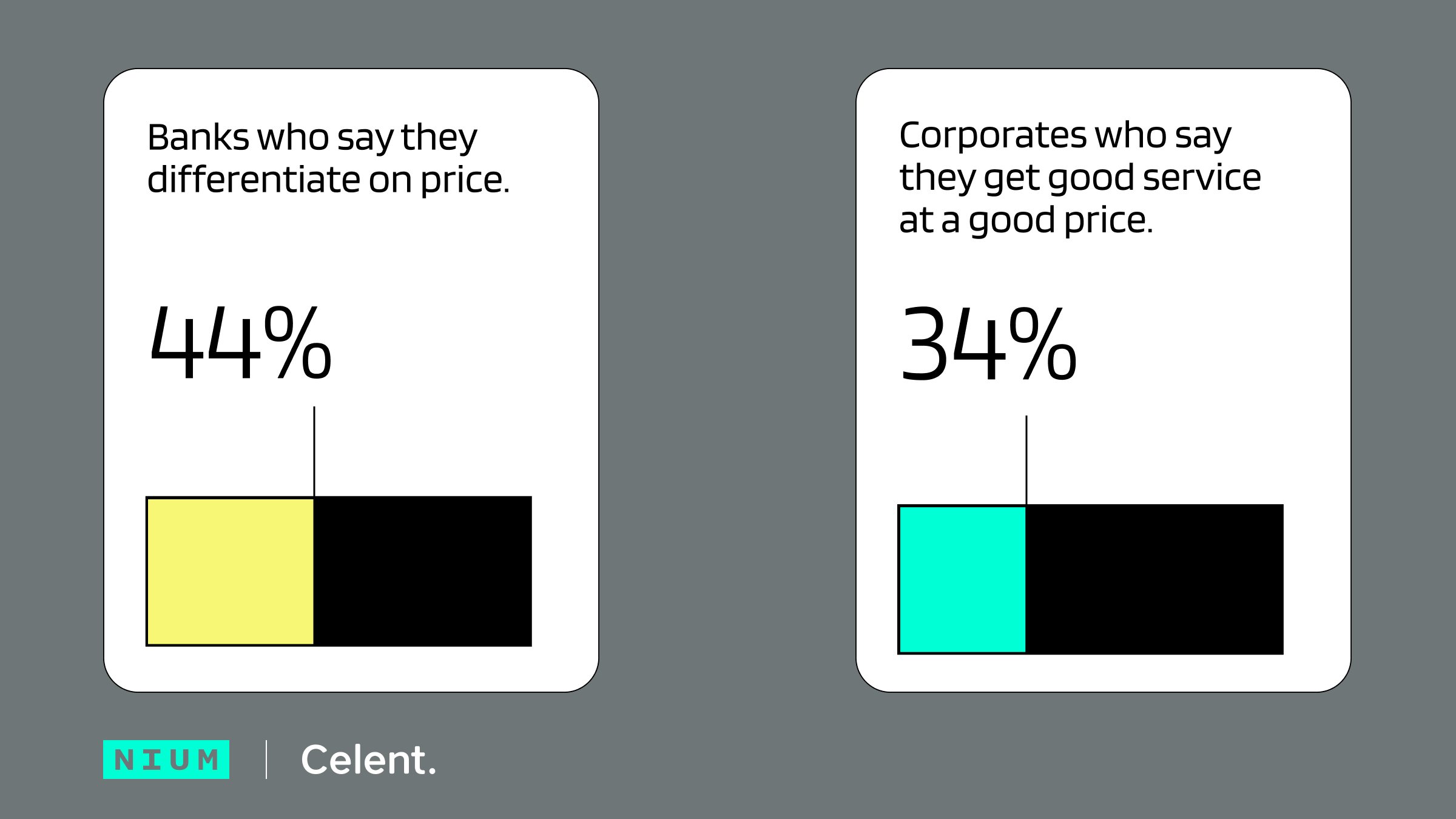
Only one-third of surveyed corporates are satisfied with their current cross-border payments providers. This dissatisfaction is significant, especially given that 69% still see banks as essential partners. That tension — high reliance paired with low satisfaction — is telling.
Nearly two-thirds of surveyed companies (64%) now use at least one non-bank method for outgoing international payments. They're not abandoning banks. They're hedging, testing alternatives, and signaling that the status quo isn't meeting their needs.
The research suggests that when payments fail or when corporates lack visibility into payment status, the costs ripple beyond the transaction itself. Failed payments disrupt supply chains, damage vendor relationships, and erode confidence in the payment system. So it's no surprise that corporates are looking for partners who can help them avoid these consequences, with over 15% of their volumes going through non-bank rails.
The opportunity is still banks' to win
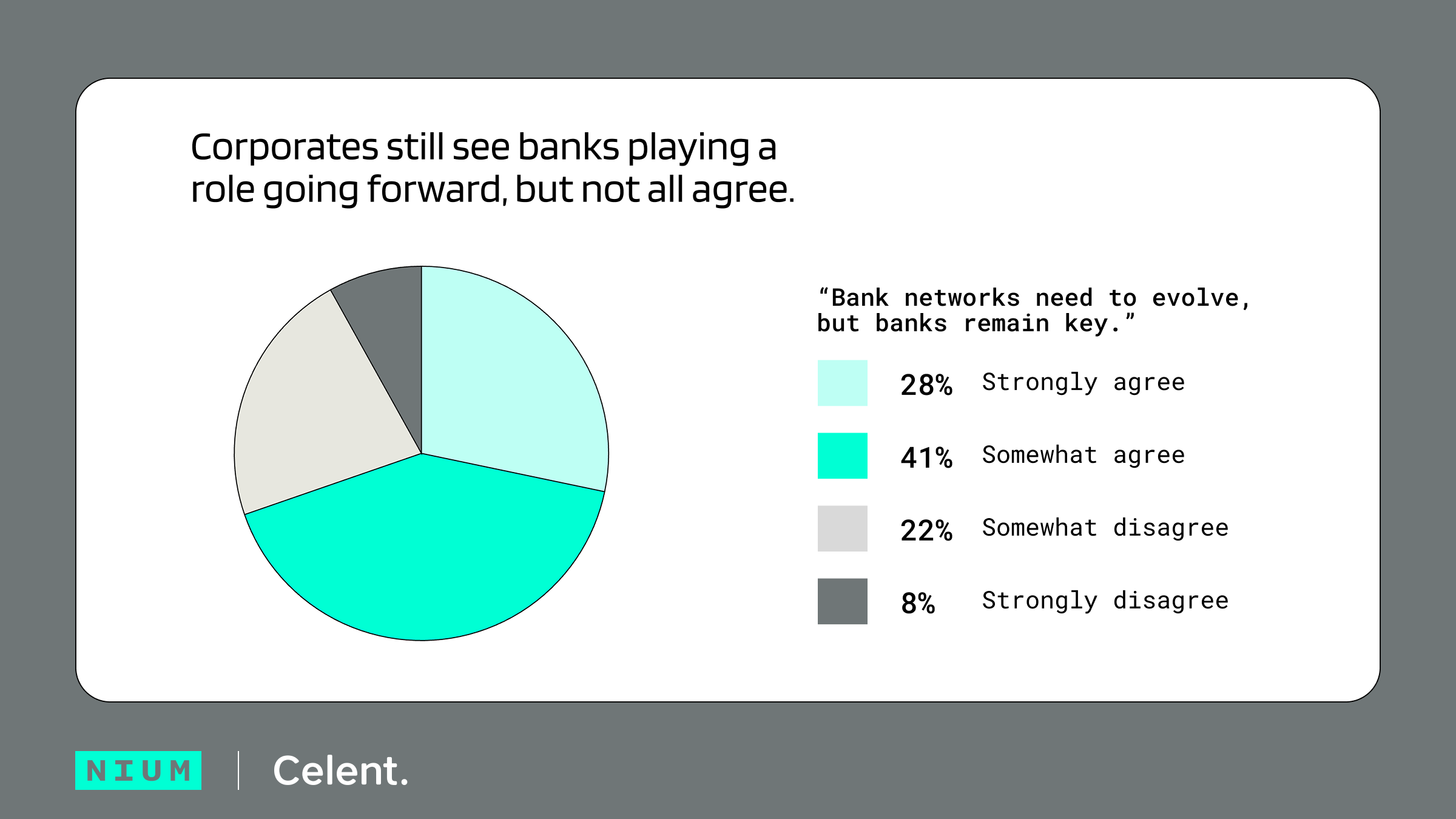
The fact that 69% of surveyed corporates still see banks as essential is not a sign of complacency — it's a signal of opportunity. These corporates recognize the value of banking relationships: regulatory compliance, liquidity management, creditworthiness, and access to global correspondent networks. Banks have built these advantages over decades.
But trust and access alone are no longer enough. Corporates are asking their banking partners to deepen their service — to help them move beyond simply executing transactions and toward managing outcomes. Banks that respond to this shift will strengthen relationships that are already valued. Those that don't will watch corporate clients look for the service they need elsewhere.
Certainty is the next frontier
Speed matters. Cost matters. But the research indicates these measures alone do not fully address what corporates actually prioritize.
What corporates are seeking is certainty: the ability to predict, see, track, and verify payment outcomes, including protection from costly failures. This is not a technical feature. It's a fundamental shift in how corporates assess the value delivered by their cross-border payment partners.
When a corporate can predict delivery timing with confidence, manage exceptions transparently, and understand the total cost of a payment before committing, they can focus on what they're actually trying to accomplish as a business — not on managing uncertainty in their payment flows.
Banks have the relationships, the infrastructure, and the trust to deliver this. We hope our report gives them the evidence to rethink how to deliver the certaintly their corporate customer are looking for; as well as ways they can modernize their payments stack instead of trying to compete solely on cost.