TLDR:
Most companies treat blockchain and traditional finance as competing choices. They aren't. Nium CTO Sekhar Cidambi argues the real breakthrough is a hybrid layer that keeps the card-tap experience enterprises already trust, while replacing the slow, costly settlement infrastructure underneath it with stablecoin rails.
In the world of global finance, we often see a divide between the "Traditional World"—built on decades of legacy infrastructure—and the "Blockchain World"—built on the promise of programmable money. For too long, the industry has viewed these as competing destinations. At Nium, we view them as two sides of the same coin. The real breakthrough isn't choosing one over the other; it’s about "bridging the two worlds" to create an experience that is powerful yet entirely invisible to the end user.
Hybrid blockchain payments: how Nium bridges both worlds
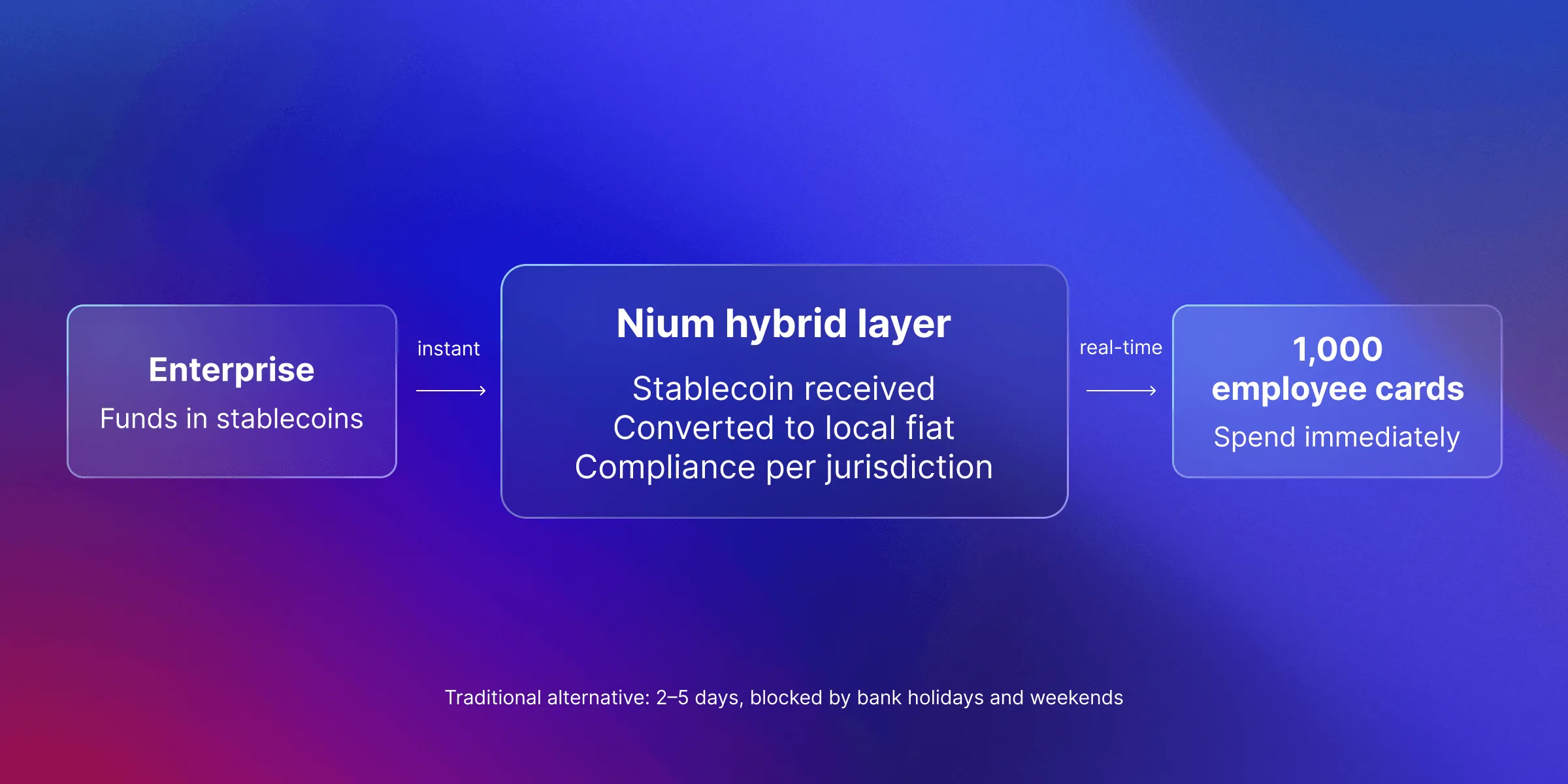
Enterprises funding 1,000 employee cards across regions wait 2–5 days under traditional banking. Nium's hybrid stablecoin layer funds them in real time. Here's how.
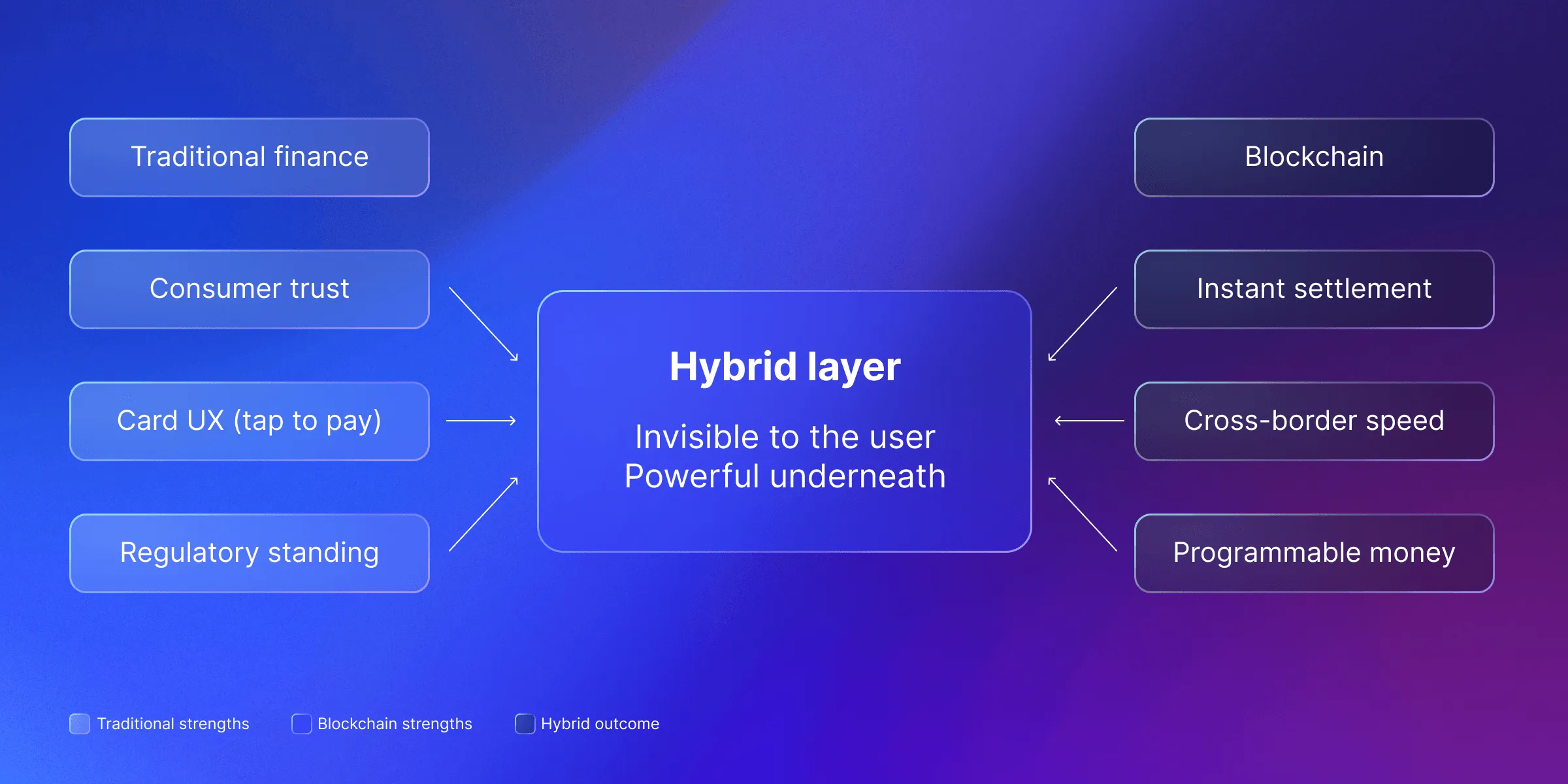
When we talk about innovation, we aren't looking to reinvent the wheel for the sake of it. Traditional finance has already solved one of the hardest problems in business: the user experience. As I often say, "if you take credit cards, they’ve solved consumer experience". There is no need to change user behavior when that behavior already works perfectly.
However, behind the scenes, the "plumbing" of traditional finance is showing its age. This is where blockchain excels. By "cherry-picking the best out of both", we can maintain the front-end simplicity of a card tap while leveraging a backend that moves at the speed of the internet.
The last-mile settlement problem in cross-border enterprise payments
Flow diagram showing Nium converting enterprise stablecoin deposits into real-time employee card funding versus 2–5 day traditional alternative
The true pain point for enterprises today isn't the transaction itself—it’s the friction of settlement and cross-border movement. In our discussions, we focus on how blockchain solves the "challenges of settlement" and the ability to "move money across jurisdictions" instantly.
Consider the impact on a global enterprise. In a traditional setup, funding 1,000 employee cards across various regions involves navigating "bank holidays" and "weekends," often leading to days of delay. By using stablecoins and blockchain rails, we enable "just-in-time funding". An enterprise can fund us in stablecoins, and "right away it shows up for us", allowing their employees to start spending immediately.
We handle the "last mile of the payment"—converting those digital assets into the specific fiat currency needed for a bank account—bridging the gap so the enterprise doesn't have to navigate the complexity themselves.
Compliance as a Moat
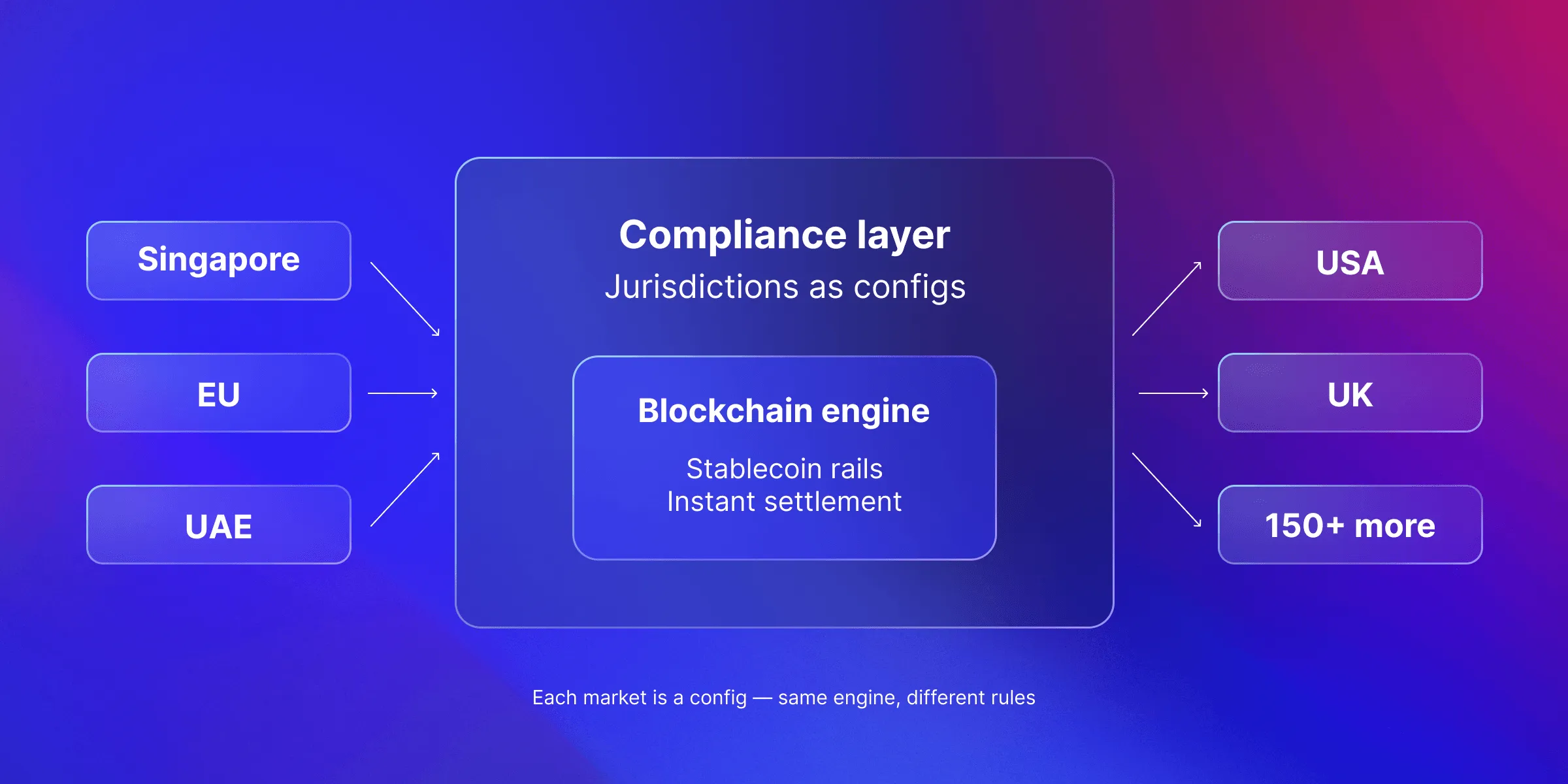
Many in the crypto space believe that decentralization means bypassing regulation. We believe the opposite: "compliance as a moat" is what will allow this technology to scale.
The biggest challenge for any blockchain solution is that "every jurisdiction is coming out with their own regulatory requirements". Moving fast is easy in one market, but doing it in 100 or 150 markets is a different ballgame. By treating "jurisdictions as configs" within our technology stack, we ensure that we meet every requirement while maintaining the speed that blockchain promises. Nium's payout network spans 190+ countries, underpinned by direct regulatory licenses in 40+ markets.
Making Blockchain Invisible
Our vision is to take what is currently a "conceptual" idea to many and make it a "reality". We aren't asking enterprises to change how they think about money. We are simply upgrading the infrastructure underneath it.
By partnering with world-class exchanges like Coinbase and utilizing networks like Circle’s CPN, we are building a system that is "trusted," has a "great user experience," and removes the "inefficiencies" of the past. The future of finance isn't a transition to blockchain; it's the seamless integration of blockchain into the world we already know.